
The Problem with Answers You Can’t Verify
AI assistants have made it easy to get a quick answer to almost any question. They have also made it easy to get a confident answer that is wrong. For most everyday questions, that is an inconvenience. For a process safety engineer, it is a real risk.
The work done in a hazard and risk study ends up in decisions about how a plant is protected. When an engineer asks how to model an independent protection layer, how a voting arrangement affects a SIL calculation, or where a setting lives in the software, the answer has to be right, and it has to be possible to show why it is right. An answer with no traceable source leaves the engineer with two poor choices: take it on faith, or go and look it up anyway, which defeats the point of asking.
A Help Assistant Built into KISS
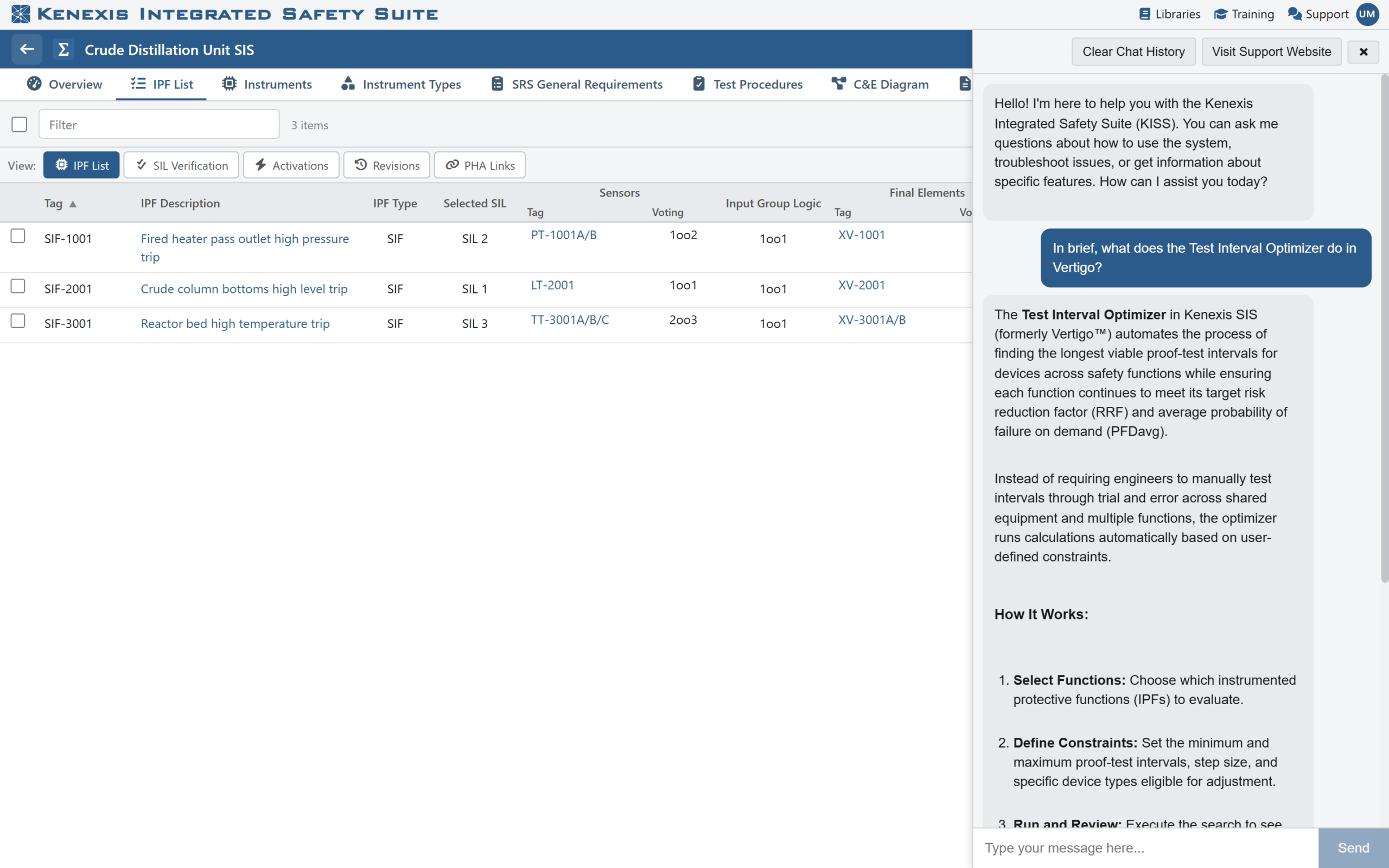
The Kenexis Integrated Safety Suite (KISS) includes a built-in help assistant, one click away from the Support button at the top of every page. Users ask questions in plain language and get plain-language answers about Kenexis software and the process safety methods it supports: hazard analysis, HAZOP and LOPA, safety instrumented systems and SIL verification, fault tree and bowtie analysis, fire and gas mapping, consequence modeling, audits and management of change.
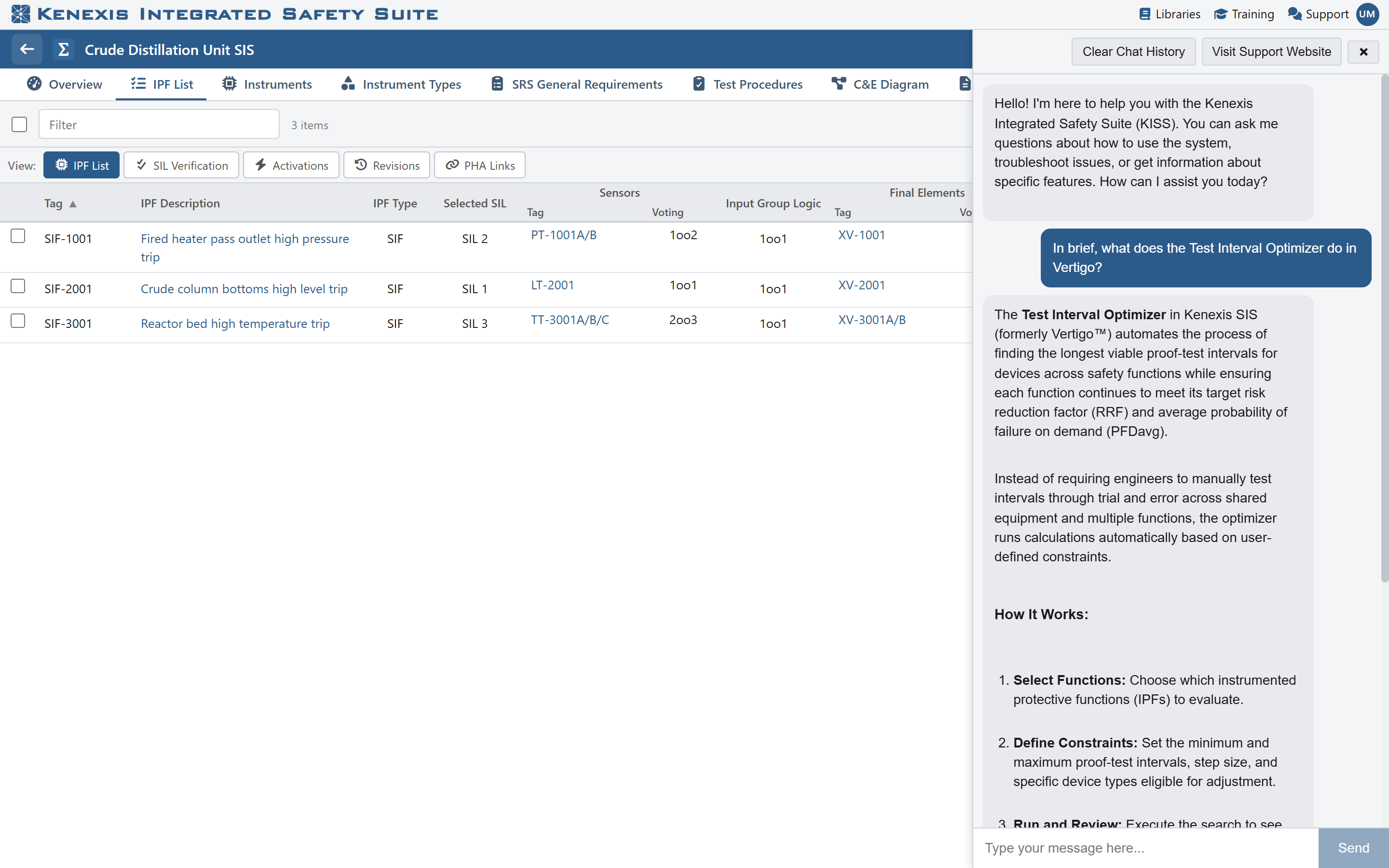
The Kenexis Integrated Safety Suite help assistant answers a question in plain language, without leaving the study.
The assistant is built to stay grounded. It draws its answers from official Kenexis content, including the user manuals and articles published by Kenexis, rather than from whatever happens to be on the internet. It stays on topic, and when Kenexis content doesn’t cover a question, it says so plainly and points the user toward Kenexis support instead of guessing.
What’s New: Answers Now Show Their Sources
Until now, the assistant’s answers pointed back to Kenexis in general terms. Now each answer lists its sources directly beneath it, and each source is a link to the exact Kenexis page or document the answer relied on. If the answer came from a user manual, the link opens that manual. If it came from an article, the link opens that article. Sources are named so the user can see at a glance what they are, and only official Kenexis pages are shown.
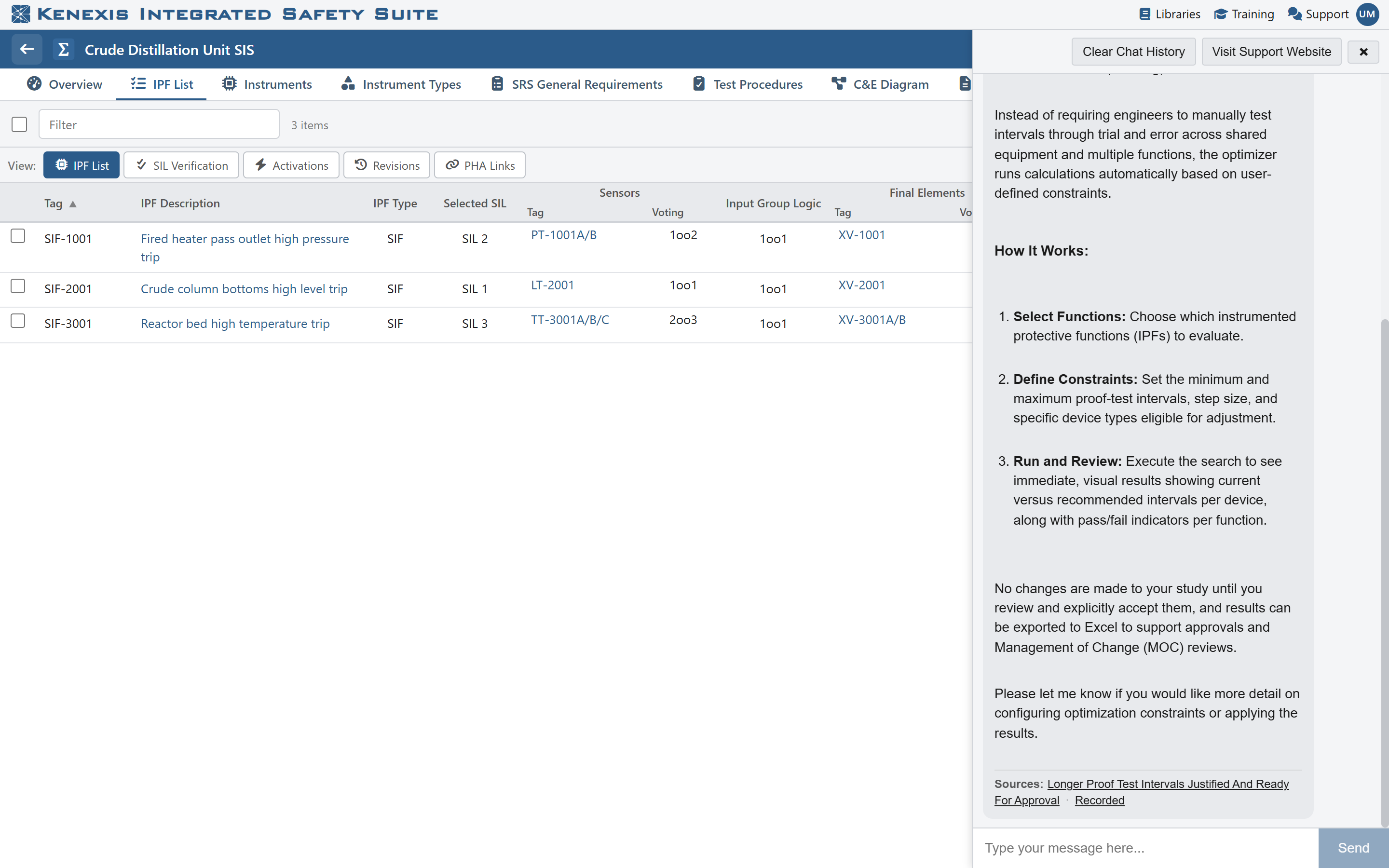
Each answer lists its sources beneath it as direct links to the Kenexis page or document it drew on.
Clicking a source opens it in a new browser tab, so the conversation stays where it is while the user reads.
In practice, it looks like this. An engineer working in a Kenexis® SIS study wants a quick refresher on what the Test Interval Optimizer does. They open the help assistant and ask. A few short paragraphs explain the optimizer in plain language, and beneath them sits a link to the Kenexis article that covers it in full, with screenshots and the reasoning behind it. One click, and the engineer is reading the source, without leaving the study they were working in.
Why It Matters
Trust, but Verify
Process safety runs on traceability. Engineers are used to showing where a failure rate came from, which standard a requirement traces to, and who approved a change. The help assistant now works the same way. An answer can be checked against the Kenexis document behind it in a single click, so the engineer can rely on it with the same confidence they would place in the manual itself.
Go Deeper Without Starting Over
A short answer is often the start of the question, not the end of it. A source link takes the user straight to the full section, with its context, illustrations and related steps. Instead of searching a website or scrolling a long manual for the right page, the user lands exactly where the answer came from and can keep reading from there.
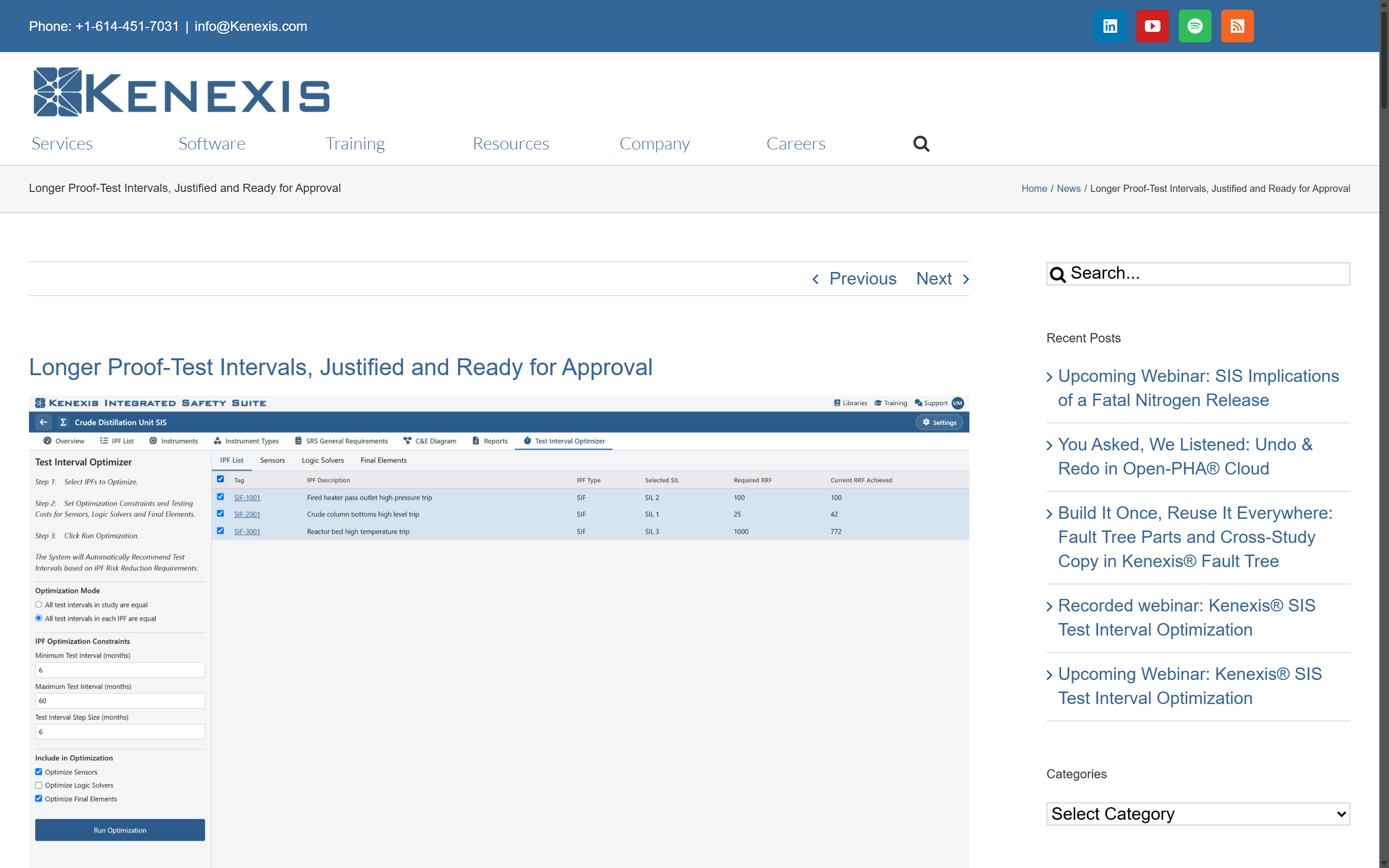
One click opens the cited Kenexis page in a new tab.
One Doorway to the Kenexis Knowledge Base
Kenexis has published a large body of manuals and technical content across its applications. The help assistant turns that library into something conversational: ask a question, get a direct answer, and follow the link into the documentation when you want more. New users find their feet faster, and experienced users spend less time hunting for a detail they half remember.
Honest About Its Limits
A help tool earns trust as much by what it won’t say as by what it will. The assistant answers from Kenexis content, declines questions that have nothing to do with Kenexis software or process safety, and says so when the documentation doesn’t cover a question. Combined with visible sources, that means users always know where an answer came from, and when to reach out to a person instead.
Available Now
The source links are live in KISS today. There is nothing to install or configure: open the help assistant from the Support button, ask a question, and the sources appear beneath the answer.
See It for Yourself
If your team wants software that supports process safety work with the same rigor the work itself demands, from the analysis to the help behind it, we’d be glad to show you around. Contact Kenexis for a demonstration.