
Over the past decade, Kenexis has been doing some of the most technically demanding work in our history — it’s time to look back at the legacy we’ve helped create.
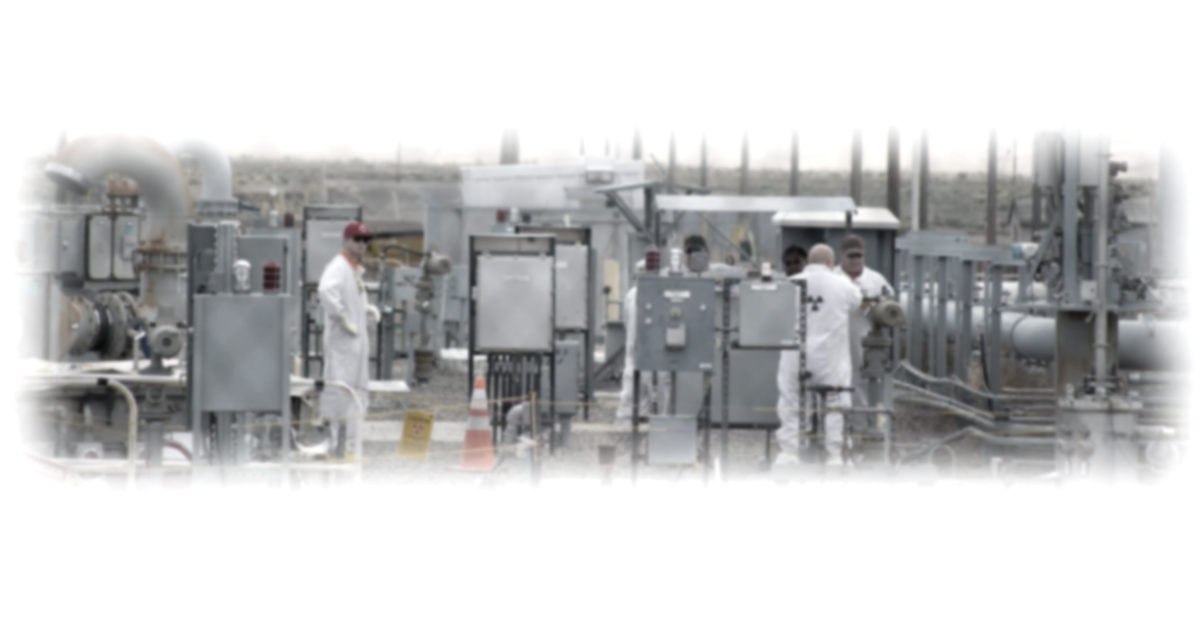
Since July 2016, Kenexis has supported DOE’s Hanford Site through an ongoing engagement focused on protecting workers from chemical vapor exposure at the world’s most complex nuclear waste storage facility. The Hanford tank farms hold 177 underground tanks, 56 million gallons of high-level radioactive waste, and over 1,800 identified chemicals — 61 of which are formally designated as Chemicals of Potential Concern requiring active monitoring and control.
Our team developed and applied a quantitative risk analysis methodology using Computational Fluid Dynamics (CFD) modeling to characterize how chemical vapors migrate and disperse across 19 tank farm areas under the full range of operating conditions and meteorological environments that workers encounter. That analysis — grounded in IEC 61511 functional safety principles — became the technical basis for the design of a hierarchy of controls including Vapor Monitoring and Detection Systems (VMDS) being deployed across the site.
The work spans a decade: a site-wide design practice, farm-specific quantitative risk analyses, CFD vapor dispersion models, sensor placement and coverage analyses, and an integrated multi-farm risk assessment. And the work continues.
This is what risk-informed engineering looks like at scale — applied where it matters most.