
Improving HAZOP Quality and Decreasing Time Using Large Language Models
Hazard and Operability (HAZOP) studies are a cornerstone of process safety management, essential for identifying and mitigating potential risks in industrial processes. However, the traditional methodology for conducting and documenting these studies is notoriously time-consuming and resource-intensive, often requiring senior personnel to dedicate significant time to in-person meetings and meticulous manual documentation. Large travel requirements leading to low quality of life cause most talented engineers to completely avoid safety as a career choice. The shift toward virtual meetings has introduced both cost-saving and quality-of-life advantages as well as novel challenges, including reduced engagement and difficulties in collaborative documentation.
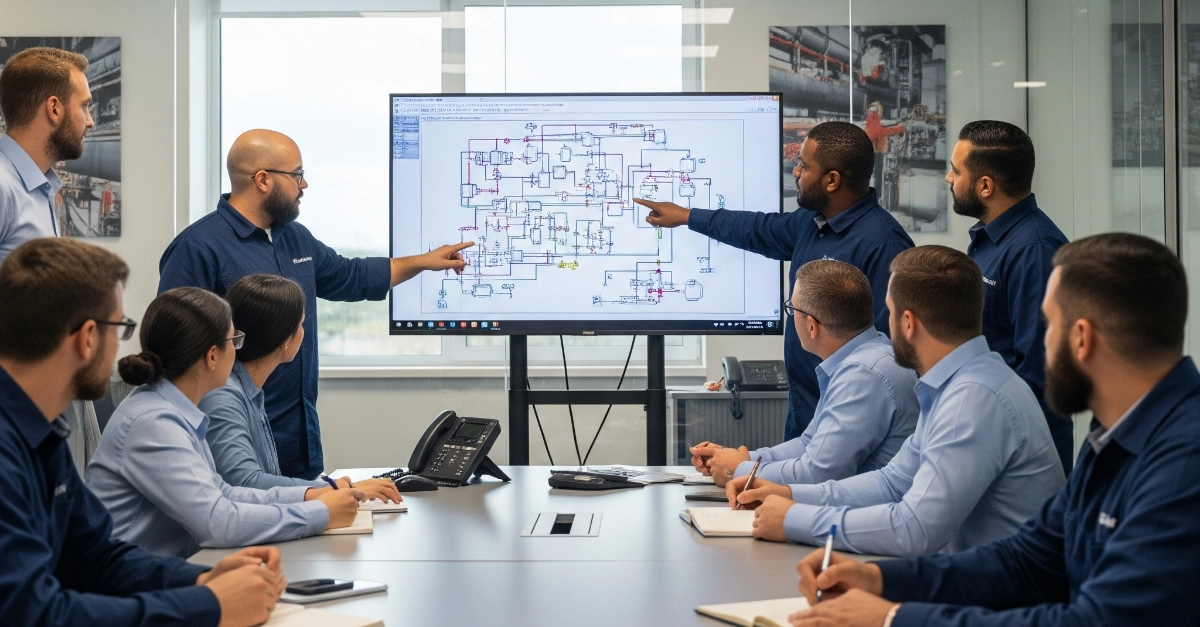
Join us for our exclusive webinar where we will discuss a new methodology that leverages the power of Large Language Models (LLMs) and automated transcription to improve the HAZOP process. By integrating these technologies into our HAZOP documentation methodology, we demonstrate a significant reduction in meeting time and a substantial improvement in the quality and efficiency of documentation. Through a comparative case study, we will contrast the traditional HAZOP facilitation method with an AI-assisted approach. The results show that using an LLM to process a meeting transcript can reduce the time required for a HAZOP study by over 50% while maintaining, and in some cases enhancing, the quality and detail of the final report. This approach streamlines the burden on facilitators and allows the entire team to focus more on substantive risk analysis.
Don’t miss out on the future of process safety.