
Determining Process Safety Time (now MERT) Focus on Fired Heater Applications
The determination of what will historically be known as Process Safety Time, which will be replaced with Maximum Event Response Time (MERT) in the next version of IEC 61511, has been difficult and poorly done in the past and continues to be a significant problem. In summary, the process safety time is the amount of time between when the process goes out of control and when the consequence event will happen. For instance, if a cooling water pump fails, how long before the reactor it serves will suffer a runaway reaction and rupture due to overpressure resulting from the runaway reaction? This time is critical in the design of safety instrumented systems because it serves as a limit for the time duration allowed for a safety instrumented function to operate. Basically, the response time for the SIF must be less than the process safety time. At least, that’s what we said in the past…. Process safety time was defined poorly in the early (and current) version of IEC 61511 such that you actually DO NOT have the entire process safety time available to you for SIF activation, which is what necessitated the new term MERT, or maximum event response time.
The primary reason for the difficulty of specifying the historical process safety time is that instrument engineers were being asked to write a spec that requires knowledge of the process in terms of dynamic mass and energy balances. Most process engineers can’t do dynamic mass and energy balances, and we are routinely asking instrument engineers, even instrument engineers of systems integrators and equipment vendors, to spec this information out. To make matters worse, engineers often fall into the trap of more precision being interpreted as a superior result. As a result, they will try to accurately determine the process safety time, sometimes doing elaborate calculations with myriad assumptions so that they can present a result to a tenth of a second. The problem is that a lot of the assumptions that they are making can make the answer orders-of-magnitude wrong inaccurate, while presenting tenths of a second precision in the answer.
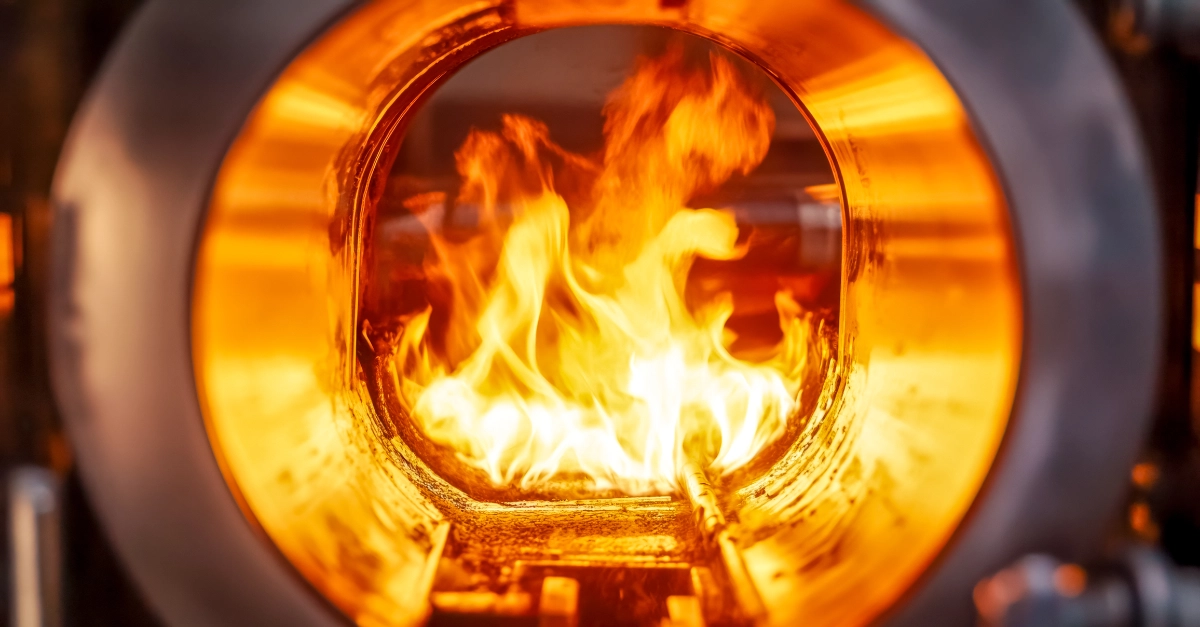
In this webinar, Ed Marszal, Founder of Kenexis, presents a best practice for determining process safety time (now MERT) with a focus on fired heater applications, which are particularly tricky and for which questionable assumptions are being made by many to generate false precision. The webinar presents a discussion of what process safety time is (currently), and all the factors that need to be considered. It will go on to discuss the move to MERT and present the new definition that will appear in the next version of the standard. Finally, the webinar presents a judgment-based approach that sets MERT in terms of “not to exceed” limits instead of precise numbers that will reduce work by orders of magnitude while still provide the SIS design team with the information that is critical in their design for the time-domain performance of their safety instrumented systems.